Planning Crew Communications for Large Outdoor Events: Survey, Base Station, Dead Zones and Returns
A field-derived checklist for base-station placement, obstruction testing, power, centralized issue and fixed-point return at an outdoor event.
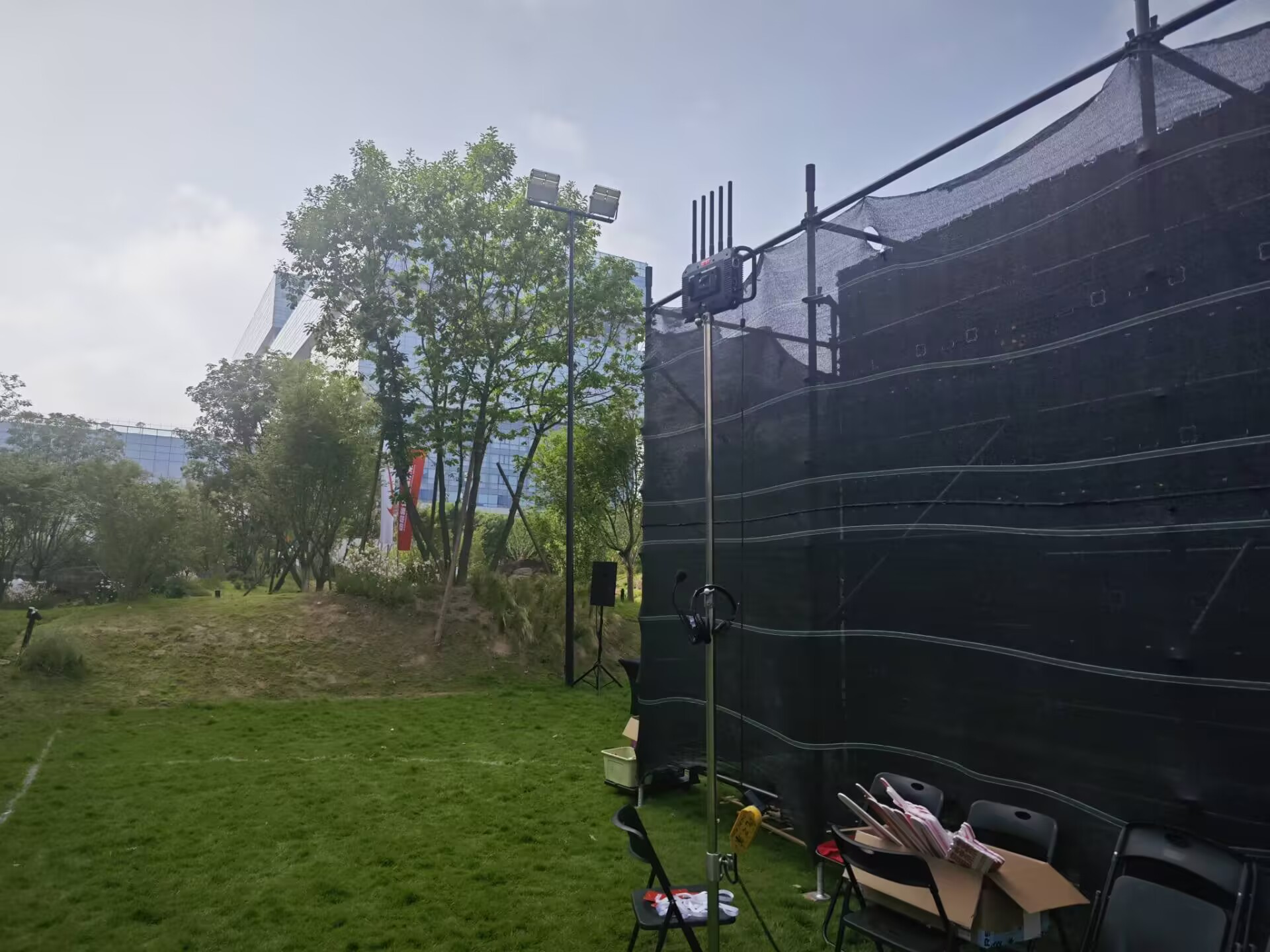
Project-site image showing equipment placement and working conditions.
Direct answer
Large-event communications depend on placement, terrain, crew movement, power and issue/return discipline—not a quoted maximum distance alone.
01
Map communication zones before discussing distance
This event was split into areas, and terrain plus a large structure weakened diagonal coverage. Real range varies with device, frequency, antenna, obstruction, interference and height; one field result is not a universal promise.
Mark direction, camera, stage, holding, travel and no-equipment zones before selecting candidate base-station points.
Checklist
- ✓Key roles
- ✓Travel routes
- ✓Large obstructions
- ✓No-equipment zones
- ✓Candidate base points
02
Find dead zones by walking real routes
A flat pre-departure test only proves basic operation. On site, carry a beltpack along real routes and make two-way calls at critical points.
If a dead zone cannot be removed, brief the crew and define a fallback such as phone, radio, hand signal or fixed contact point.
Checklist
- ✓Route walk
- ✓Two-way checks
- ✓Dead-zone map
- ✓Fallback contact
03
Balance signal, safety and power
The base station in this case was restricted to one corner, reducing coverage. Placement must also avoid guest flow, rain, impact and trip hazards.
Use an appropriate external supply near power or a suitable battery where cable runs are unsafe. Track remaining power and schedule a replacement window.
Checklist
- ✓Allowed placement
- ✓Weather and impact protection
- ✓Power method
- ✓Power checks
- ✓Replacement window
04
Issue and return are part of the system
Central issue was faster than searching for users across a large venue, and units returned to the same point.
Number every unit and record role, initial power and return state. Test critical roles first and keep charged spares with one owner.
Checklist
- ✓Unit IDs
- ✓Role register
- ✓Issue power
- ✓Fixed return point
- ✓Spare owner
Frequently asked questions
Can the rated intercom distance be used as venue coverage?
No. Obstruction, interference, terrain, antennas and placement alter real performance. Test the actual route.
Can every dead zone be fixed by moving the base station?
No. Venue rules and large structures may leave unavoidable gaps, so define fallback contact.
Why issue and return units centrally?
It improves numbering, testing, responsibility tracking and final count in a distributed venue.